

Complication Avoidance in Deep-Seated Brain Lesions: Current Concepts
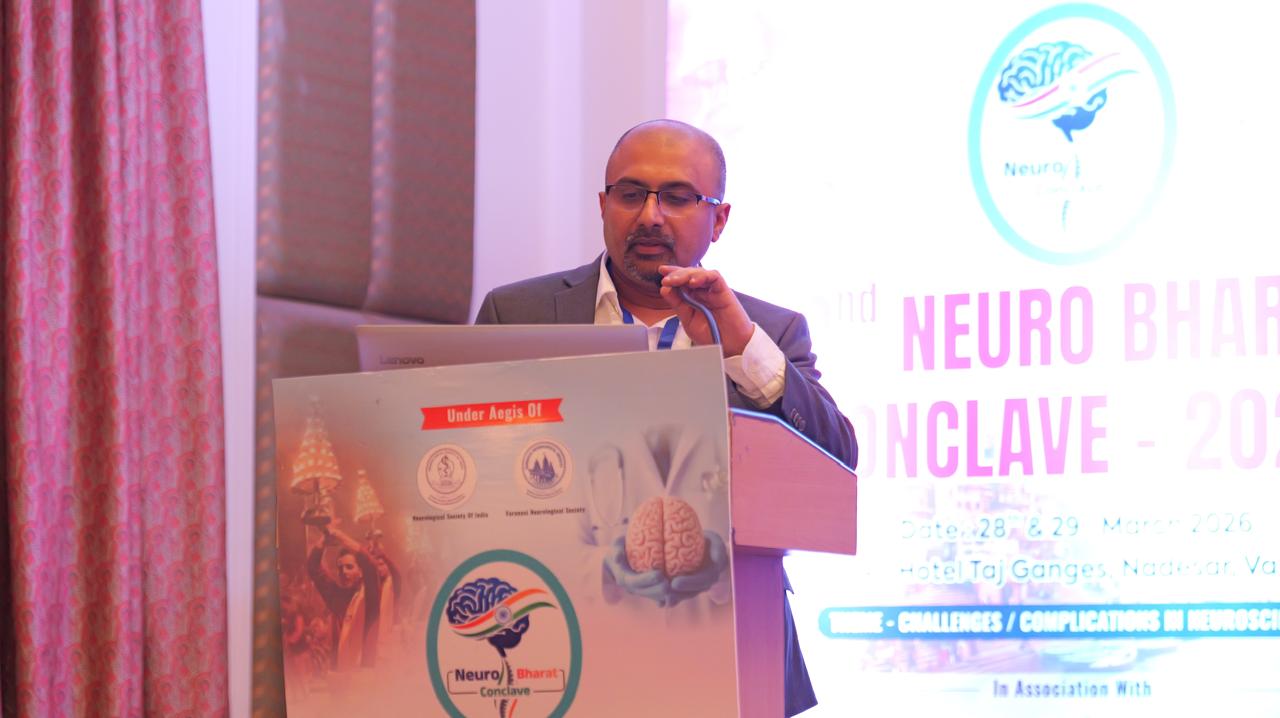
Dr. Mohana Rao Patibandla presenting on “Complication Avoidance in Deep-Seated Lesions – Current Concepts” at the 2nd NeuroBharat Conclave 2026 in Varanasi.
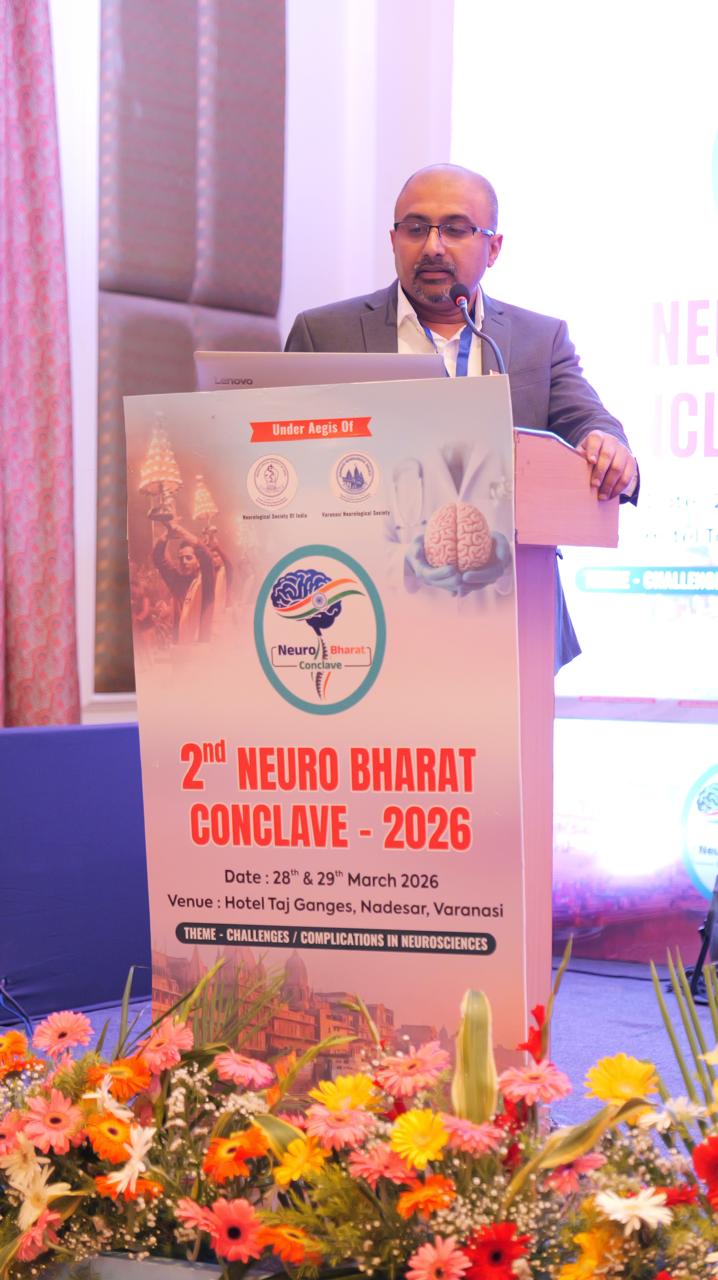
Dr. Mohana Rao Patibandla delivering his keynote lecture on complication avoidance in deep-seated brain lesions at the 2nd NeuroBharat Conclave 2026, Varanasi.
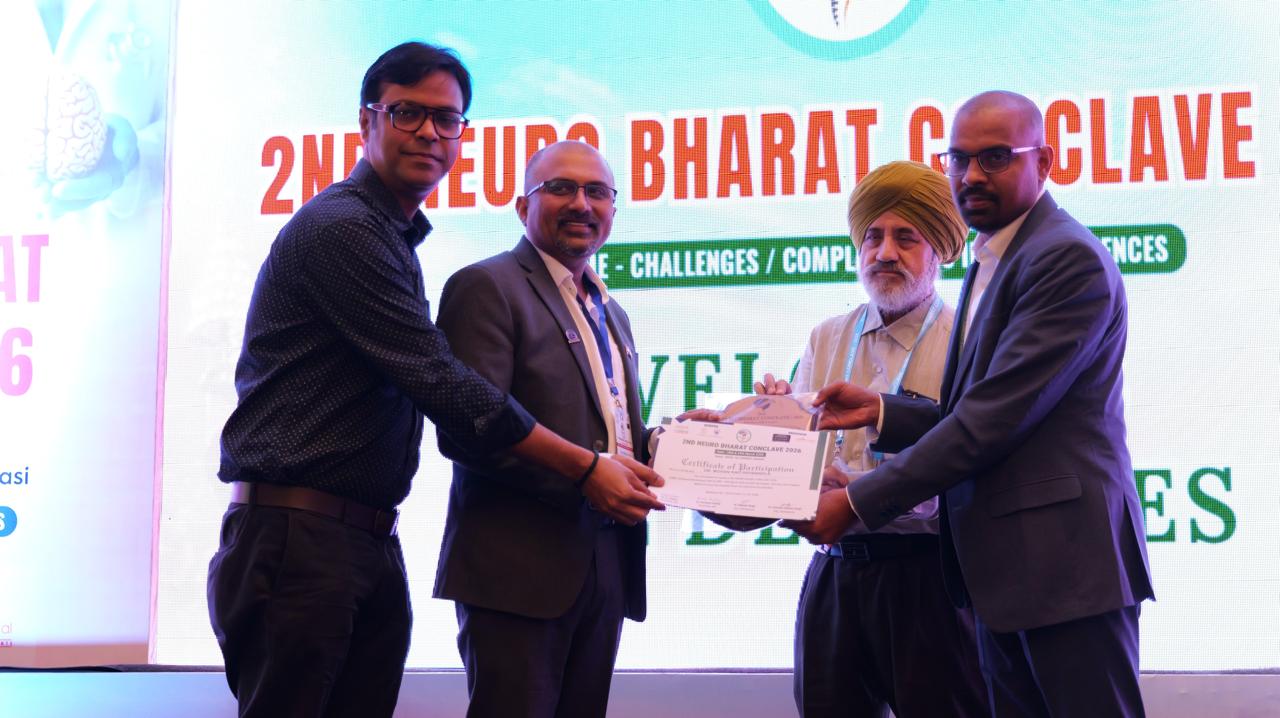
Dr. Mohana Rao Patibandla receiving a certificate of appreciation at the 2nd NeuroBharat Conclave 2026, Varanasi, following his presentation on complication avoidance in deep-seated brain lesions.
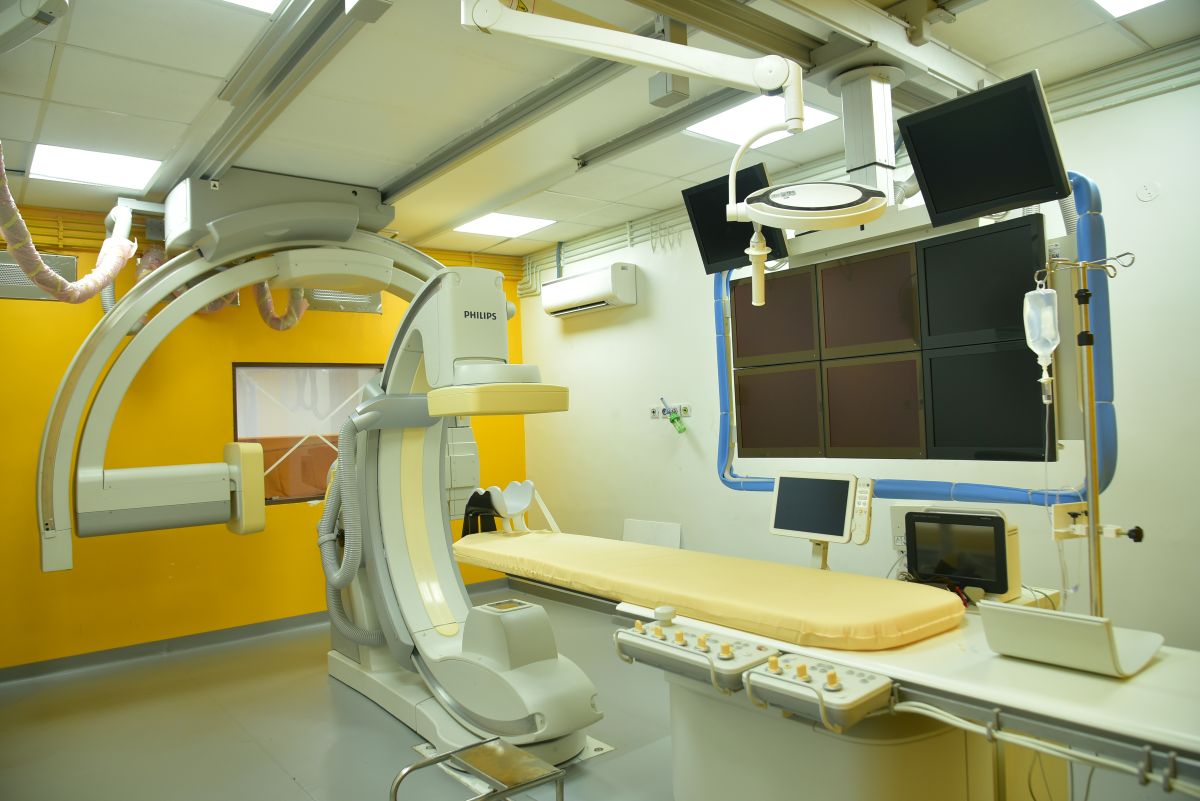
The advanced biplane cath lab at Dr. Rao's Hospital, designed for precision neurovascular procedures and minimally invasive surgeries, first in Andhra Pradesh and Telangana in India.
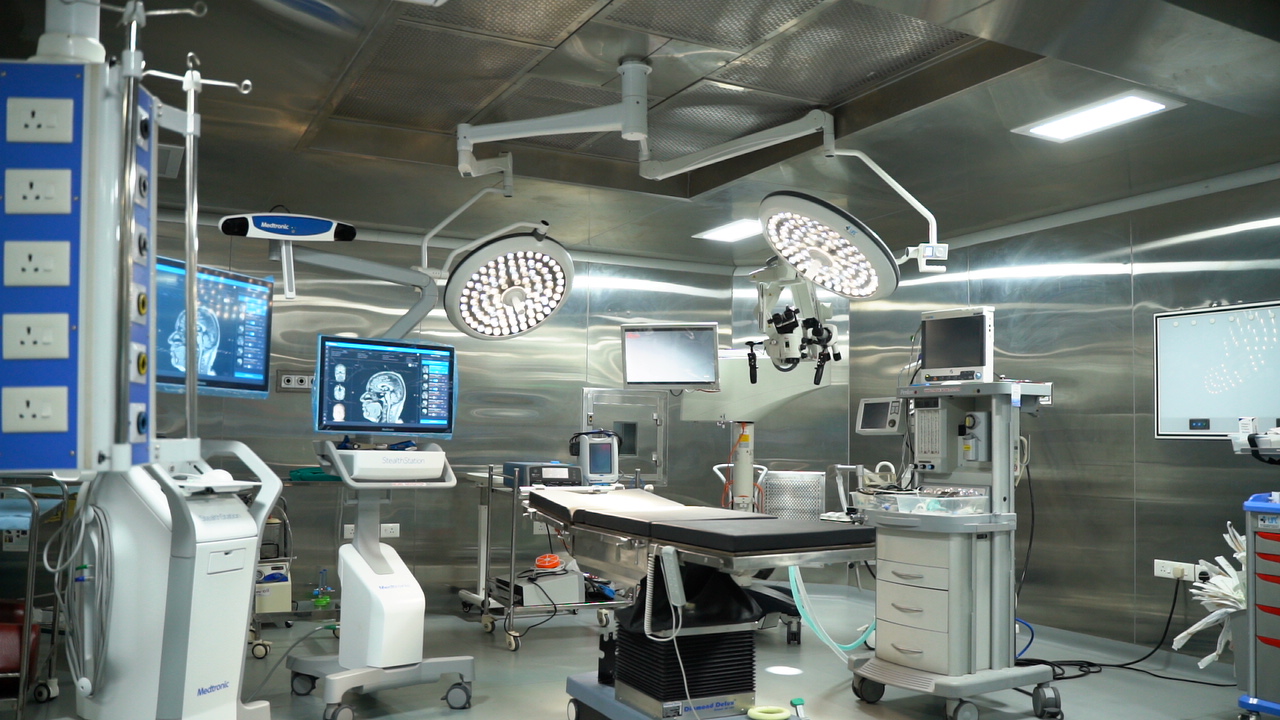
The high-tech neurosurgery operating room at Dr. Rao's Hospital, Guntur featuring advanced imaging and navigation systems for precise brain and spine surgeries.
Advanced white matter sparing techniques improve safety and outcomes in deep-seated brain lesion surgery, presented at NeuroBharat Conclave 2026 By Dr Rao
In a landmark presentation that signals a paradigm shift in neurosurgical practice, Dr. Mohana Rao Patibandla, widely regarded as one of the best neurosurgeons in Guntur, delivered an impactful talk at the prestigious 2nd NeuroBharat Conclave held in Varanasi on March 29, 2026. His presentation, titled “Complication Avoidance in Deep-Seated Lesions – Current Concepts,” received significant appreciation from national and international delegates for its scientific depth, clinical relevance, and introduction of advanced white matter sparing techniques in India.
Deep-seated brain lesions—located in critical regions such as the basal ganglia, thalamus, and deep white matter—have historically been associated with high surgical morbidity due to their proximity to essential neural pathways. Conventional surgical approaches, often involving large craniotomies and fixed retractors, carried substantial risks of white matter injury, resulting in long-term neurological deficits.
Addressing this longstanding challenge, Dr. Rao presented a transformative approach centered on complication avoidance through trajectory intelligence and white matter preservation. His talk emphasized that surgical complications are not inherent to the pathology but are frequently a consequence of suboptimal surgical corridors.
A key highlight of the presentation was the integration of diffusion tensor imaging (DTI) for preoperative planning. This advanced imaging modality enables real-time visualization of white matter tracts, allowing surgeons to design trans-sulcal, parafascicular trajectories that align parallel to neural pathways rather than intersecting them. This approach facilitates “fiber splaying” instead of fiber transection, thereby preserving neurological function.
Dr. Rao further demonstrated how minimally invasive technologies—including tubular retractor systems and endoscopic visualization—can be combined to create atraumatic surgical corridors. These innovations significantly reduce cortical disruption, improve intraoperative visualization, and enhance surgical precision.
“Complications in deep-seated lesion surgery are not inevitable—they are preventable with meticulous planning and respect for white matter architecture,” said Dr. Rao during his address, a statement that resonated strongly with the audience and emerged as a central theme of the session.
The presentation also highlighted improved clinical outcomes associated with this approach, including:
Reduced postoperative neurological deficits
Enhanced functional recovery
Shorter hospital stays
Improved patient quality of life
The session was widely acknowledged as one of the most forward-thinking discussions at the conclave, with experts recognizing it as an important step toward aligning Indian neurosurgical practice with global standards seen in leading international centers such as AANS and EANS platforms.
Importantly, Dr. Rao is among the first Indian neurosurgeons to systematically adopt and present this white matter sparing paradigm for deep-seated lesions, marking a significant milestone in the evolution of minimally invasive neurosurgery in India.
This advancement underscores a broader shift in neurosurgery—from aggressive resection strategies toward precision-based, function-preserving interventions guided by connectomics and advanced imaging.
About Dr. Rao’s Hospital
Dr. Rao’s Hospital, based in Guntur, Andhra Pradesh, is a leading center for advanced neurology, neurosurgery, and spine care. Equipped with state-of-the-art infrastructure and internationally trained expertise, the hospital is committed to delivering world-class outcomes with a strong focus on innovation and patient safety. It is recognized as one of the best centers for brain, spine, and nerve care in India.
Media Contact:
📧 info@drraoshospitals.com | drpatibandla@gmail.com
🌐 https://drraoshospitals.com
📞 090100 56444
Mohana Rao Patibandla
Patibandla Narayana Swamy Neurosciences LLP
+91 90100 56444
info@drraoshospitals.com
Visit us on social media:
LinkedIn
Instagram
Facebook
YouTube
X
Dr. Rao's Hosptial - the best neurosurgery hospital in India
Legal Disclaimer:
EIN Presswire provides this news content "as is" without warranty of any kind. We do not accept any responsibility or liability for the accuracy, content, images, videos, licenses, completeness, legality, or reliability of the information contained in this article. If you have any complaints or copyright issues related to this article, kindly contact the author above.
