Automated Submerged Arc Welding Box Beam Lines: Hualian's Box-Column Equipment in the India Market
WUXI, JIANGSU, CHINA, September 29, 2026 /EINPresswire.com/ -- Investing in an automated submerged arc welding box beam line enables structural steel fabricators to satisfy soaring demand for heavy columns across India's infrastructure sector. Manufacturing heavy structural machinery since 1987, industrial equipment builder Wuxi Hualian Science & Technology Group—branded across international markets as Hualian, provides complete box-column manufacturing systems. Box columns provide exceptional torsional rigidity and multi-axis load capacity for high-rise commercial buildings, highway viaducts, metro rail corridors, and industrial manufacturing plants. Transitioning from scattered manual workstations to a synchronized box-column line dramatically improves production consistency, prevents angular distortion, and reduces expensive rework.
Locate the seams before choosing the welding arrangement
Designing a box-column production cell begins with analyzing specific weld joint locations and structural penetration requirements. A standard box column consists of four heavy steel plates enclosing internal stiffening diaphragms. External corner seams require full-penetration or partial-penetration longitudinal welds across lengths often exceeding 15 meters. Heavy flange and web plates ranging from 20 mm to 60 mm require multi-pass welding with precise heat input control to prevent excessive angular distortion. Internal diaphragm plates, which stiffen columns against buckling, must be welded before enclosing the final cover plate. Fabricators must select specialized electroslag or arc processes capable of joining blind internal seams cleanly.
Analyzing joint accessibility across every fabrication phase ensures that fit-up fixtures, submerged arc welding torches, and inspection tools access weld seams without structural interference. Heavy box columns require balanced multi-pass submerged arc welding to control heat accumulation across thick steel plates. Excessive localized heat inputs cause asymmetric shrinkage, resulting in permanent longitudinal bowing. Implementing staggered welding passes and symmetrical dual-arc deposition preserves structural straightness across 15-meter column lengths. Thermal monitoring sensors positioned along the welding gantry track plate surface temperatures during successive welding passes. Regulating interpass temperatures below 250°C prevents heat buildup that can degrade metallurgical grain structure in heavy structural steels.
Understand the wire, arc and flux as one welding system
Submerged arc welding operates through dynamic metallurgical interaction between wire electrodes, electrical arcs, and granular flux. In a submerged arc system, the electrical arc remains hidden beneath a blanket of fusible mineral flux. The molten flux shield prevents atmospheric nitrogen and oxygen from contaminating the weld deposit. It also retards cooling rates, promoting ductile ferritic microstructure and reducing the formation of brittle martensite in thick structural joints. Tandem twin-wire configurations combine DC lead arcs for penetration with AC trail arcs for deposition, boosting travel speeds beyond 800 mm per minute. Variable waveform AC control minimizes magnetic arc blow when welding deep corner grooves.
Selecting the correct wire-flux combination ensures sound mechanical properties, including high yield strength and Charpy V-notch impact toughness under heavy cyclic loading. Using bonded basic fluxes enhances weld metal impact toughness at sub-zero design temperatures. Low moisture pickup characteristics safeguard heavy column corner joints against delayed hydrogen-assisted cracking in humid industrial environments.
Place Hualian's SAW stations within the box-fabrication equipment scope
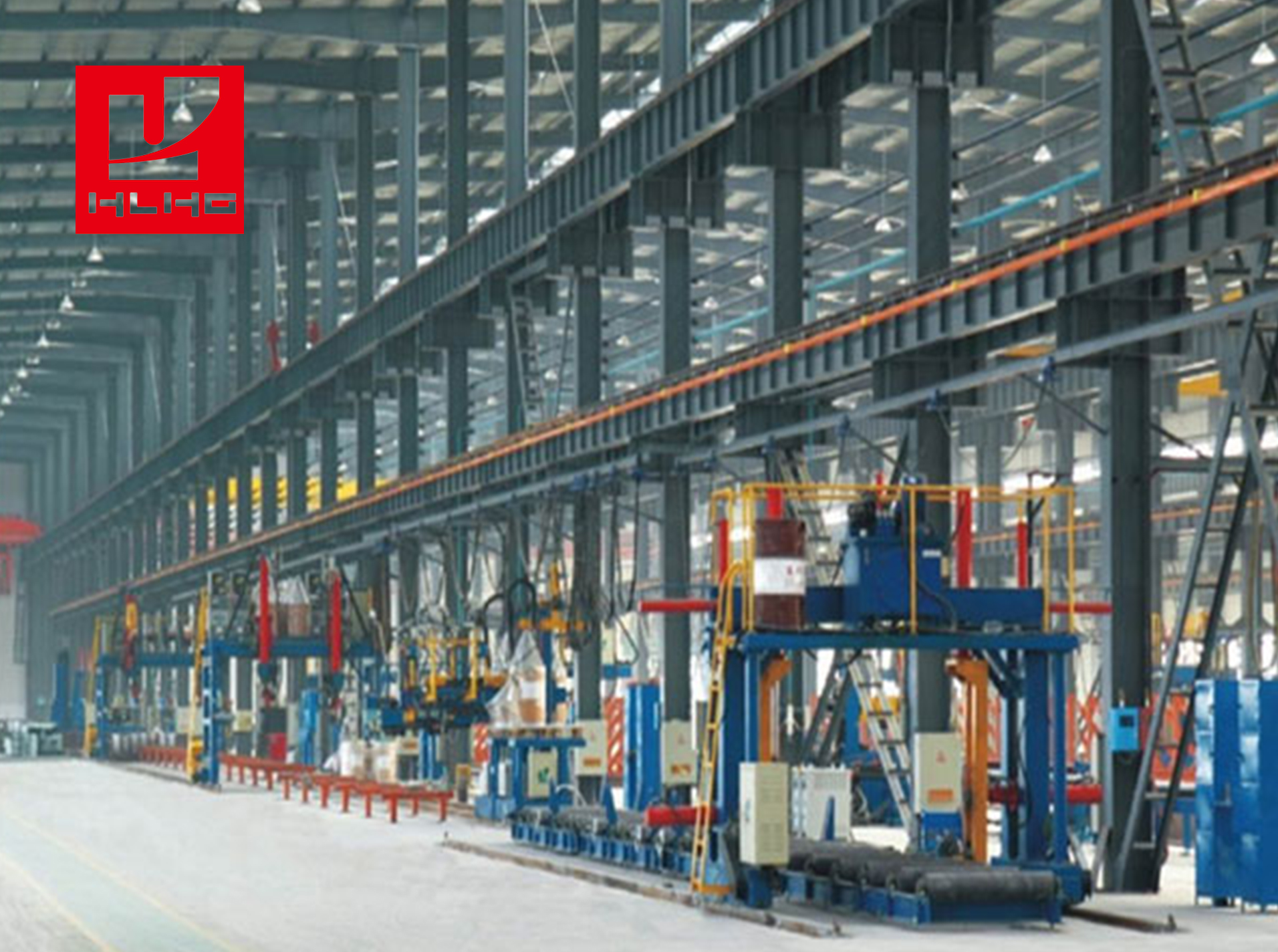
Submerged arc welding represents the core joining operation within a comprehensive box column manufacturing route. A complete Hualian production line organizes multiple specialized machines around heavy roller beds. A precision hydraulic four-plate assembly machine clamps four plates into true rectangular alignment, executing automated tack welds along corner seams. Cantilever or portal electroslag welding stations then deposit full-penetration welds joining internal diaphragms through external access holes. Following electroslag welding, heavy-duty MHJ-4000C gantry submerged arc welders deposit external corner seams using dual tandem torches. Motorized 60-degree turnover machines tilt columns into the flat trough position for rapid fillet deposition, while end face milling machines mill column ends flat for field erection.
Integrating automated turnover fixtures eliminates dangerous overhead crane turning, protecting column corners and establishing a continuous fabrication rhythm across high-volume bays. Motorized 60-degree turnover machines tilt heavy box columns smoothly, positioning corner seams in the flat downhand orientation. Downhand fillet welding enables fabricators to utilize larger welding wire diameters and higher amperage settings. Depositing large weld beads rapidly in the flat groove minimizes welding cycle times while ensuring deep root fusion.
Keep procedure control distinct from equipment travel
High structural weld quality requires maintaining strict separation between mechanical machine travel and qualified welding procedure specifications. Machine gantries provide smooth, vibration-free travel via dual-drive AC servo motors. However, mechanical travel alone cannot ensure sound metallurgical fusion under AWS D1.1 structural welding codes. Fabricators must qualify preheat temperatures, inter-pass temperature limits, wire feed voltages, and heat input calculations. Calibrating travel speed to deposit specific weld bead volumes prevents excessive dilution and ensures uniform penetration profiles across varying plate thicknesses. Preheating heavy column plates with multi-nozzle gas torches before submerged arc welding drives off surface moisture and reduces cooling rates in thick heat-affected zones. Maintaining verified preheat temperatures between 100°C and 150°C prevents hydrogen-induced cracking in high-strength structural steels.
Practical questions about submerged arc welding flux
Managing granular flux correctly is essential for preventing porosity and achieving clean bead appearance in structural steel shops.
Can all material left after SAW be reused as flux?
Un-melted granular flux can be recovered, filtered through fine mesh screens, and blended with virgin flux. However, fused vitrified slag crust must never be crushed and re-fed as welding flux, as it lacks essential deoxidizing elements. In tropical Indian fabrication bays, granular flux easily absorbs atmospheric humidity during monsoon months. Recovered flux must be re-baked in holding ovens at 250°C to 300°C for one to two hours before re-use to eliminate moisture that causes hydrogen cracking.
Is the weld pool directly visible during SAW?
The molten weld pool remains completely covered by granular flux throughout submerged arc welding. Operators cannot observe arc behavior directly with visual welding shields. Welding heads rely on mechanical guide wheels or optical laser tracking sensors to follow joint seams dynamically. Laser seam trackers guide cross-slides with sub-millimeter precision, ensuring accurate weld placement along wandering joints.
Specify a submerged arc welding box beam line for an India project
Procuring a box beam production system in India requires evaluating workshop electrical grid stability, available crane hook heights, and maximum column weights. Buyers should compile structural section dimensions, monthly tonnage targets, and qualified steel grades. Detailed project specifications should indicate column cross-sections, internal diaphragm schedules, and specified non-destructive testing acceptance levels. Foundation trenches beneath the turnover stations must include drainage sumps to manage monsoon groundwater infiltration. Protecting hydraulic power packs from water ingress ensures reliable column turning operations during heavy seasonal rains.
Indian EPC contractors and structural steel fabricators can consult the technical engineering team at Hualian: https://www.hualianoversea.com/. Hualian provides engineered box column machinery configurations built for heavy structural manufacturing.
Locate the seams before choosing the welding arrangement
Designing a box-column production cell begins with analyzing specific weld joint locations and structural penetration requirements. A standard box column consists of four heavy steel plates enclosing internal stiffening diaphragms. External corner seams require full-penetration or partial-penetration longitudinal welds across lengths often exceeding 15 meters. Heavy flange and web plates ranging from 20 mm to 60 mm require multi-pass welding with precise heat input control to prevent excessive angular distortion. Internal diaphragm plates, which stiffen columns against buckling, must be welded before enclosing the final cover plate. Fabricators must select specialized electroslag or arc processes capable of joining blind internal seams cleanly.
Analyzing joint accessibility across every fabrication phase ensures that fit-up fixtures, submerged arc welding torches, and inspection tools access weld seams without structural interference. Heavy box columns require balanced multi-pass submerged arc welding to control heat accumulation across thick steel plates. Excessive localized heat inputs cause asymmetric shrinkage, resulting in permanent longitudinal bowing. Implementing staggered welding passes and symmetrical dual-arc deposition preserves structural straightness across 15-meter column lengths. Thermal monitoring sensors positioned along the welding gantry track plate surface temperatures during successive welding passes. Regulating interpass temperatures below 250°C prevents heat buildup that can degrade metallurgical grain structure in heavy structural steels.
Understand the wire, arc and flux as one welding system
Submerged arc welding operates through dynamic metallurgical interaction between wire electrodes, electrical arcs, and granular flux. In a submerged arc system, the electrical arc remains hidden beneath a blanket of fusible mineral flux. The molten flux shield prevents atmospheric nitrogen and oxygen from contaminating the weld deposit. It also retards cooling rates, promoting ductile ferritic microstructure and reducing the formation of brittle martensite in thick structural joints. Tandem twin-wire configurations combine DC lead arcs for penetration with AC trail arcs for deposition, boosting travel speeds beyond 800 mm per minute. Variable waveform AC control minimizes magnetic arc blow when welding deep corner grooves.
Selecting the correct wire-flux combination ensures sound mechanical properties, including high yield strength and Charpy V-notch impact toughness under heavy cyclic loading. Using bonded basic fluxes enhances weld metal impact toughness at sub-zero design temperatures. Low moisture pickup characteristics safeguard heavy column corner joints against delayed hydrogen-assisted cracking in humid industrial environments.
Place Hualian's SAW stations within the box-fabrication equipment scope
Submerged arc welding represents the core joining operation within a comprehensive box column manufacturing route. A complete Hualian production line organizes multiple specialized machines around heavy roller beds. A precision hydraulic four-plate assembly machine clamps four plates into true rectangular alignment, executing automated tack welds along corner seams. Cantilever or portal electroslag welding stations then deposit full-penetration welds joining internal diaphragms through external access holes. Following electroslag welding, heavy-duty MHJ-4000C gantry submerged arc welders deposit external corner seams using dual tandem torches. Motorized 60-degree turnover machines tilt columns into the flat trough position for rapid fillet deposition, while end face milling machines mill column ends flat for field erection.
Integrating automated turnover fixtures eliminates dangerous overhead crane turning, protecting column corners and establishing a continuous fabrication rhythm across high-volume bays. Motorized 60-degree turnover machines tilt heavy box columns smoothly, positioning corner seams in the flat downhand orientation. Downhand fillet welding enables fabricators to utilize larger welding wire diameters and higher amperage settings. Depositing large weld beads rapidly in the flat groove minimizes welding cycle times while ensuring deep root fusion.
Keep procedure control distinct from equipment travel
High structural weld quality requires maintaining strict separation between mechanical machine travel and qualified welding procedure specifications. Machine gantries provide smooth, vibration-free travel via dual-drive AC servo motors. However, mechanical travel alone cannot ensure sound metallurgical fusion under AWS D1.1 structural welding codes. Fabricators must qualify preheat temperatures, inter-pass temperature limits, wire feed voltages, and heat input calculations. Calibrating travel speed to deposit specific weld bead volumes prevents excessive dilution and ensures uniform penetration profiles across varying plate thicknesses. Preheating heavy column plates with multi-nozzle gas torches before submerged arc welding drives off surface moisture and reduces cooling rates in thick heat-affected zones. Maintaining verified preheat temperatures between 100°C and 150°C prevents hydrogen-induced cracking in high-strength structural steels.
Practical questions about submerged arc welding flux
Managing granular flux correctly is essential for preventing porosity and achieving clean bead appearance in structural steel shops.
Can all material left after SAW be reused as flux?
Un-melted granular flux can be recovered, filtered through fine mesh screens, and blended with virgin flux. However, fused vitrified slag crust must never be crushed and re-fed as welding flux, as it lacks essential deoxidizing elements. In tropical Indian fabrication bays, granular flux easily absorbs atmospheric humidity during monsoon months. Recovered flux must be re-baked in holding ovens at 250°C to 300°C for one to two hours before re-use to eliminate moisture that causes hydrogen cracking.
Is the weld pool directly visible during SAW?
The molten weld pool remains completely covered by granular flux throughout submerged arc welding. Operators cannot observe arc behavior directly with visual welding shields. Welding heads rely on mechanical guide wheels or optical laser tracking sensors to follow joint seams dynamically. Laser seam trackers guide cross-slides with sub-millimeter precision, ensuring accurate weld placement along wandering joints.
Specify a submerged arc welding box beam line for an India project
Procuring a box beam production system in India requires evaluating workshop electrical grid stability, available crane hook heights, and maximum column weights. Buyers should compile structural section dimensions, monthly tonnage targets, and qualified steel grades. Detailed project specifications should indicate column cross-sections, internal diaphragm schedules, and specified non-destructive testing acceptance levels. Foundation trenches beneath the turnover stations must include drainage sumps to manage monsoon groundwater infiltration. Protecting hydraulic power packs from water ingress ensures reliable column turning operations during heavy seasonal rains.
Indian EPC contractors and structural steel fabricators can consult the technical engineering team at Hualian: https://www.hualianoversea.com/. Hualian provides engineered box column machinery configurations built for heavy structural manufacturing.
Wuxi Hualian Science & Technology Group
Hualian
email us here
Visit us on social media:
YouTube
Legal Disclaimer:
EIN Presswire provides this news content "as is" without warranty of any kind. We do not accept any responsibility or liability for the accuracy, content, images, videos, licenses, completeness, legality, or reliability of the information contained in this article. If you have any complaints or copyright issues related to this article, kindly contact the author above.